
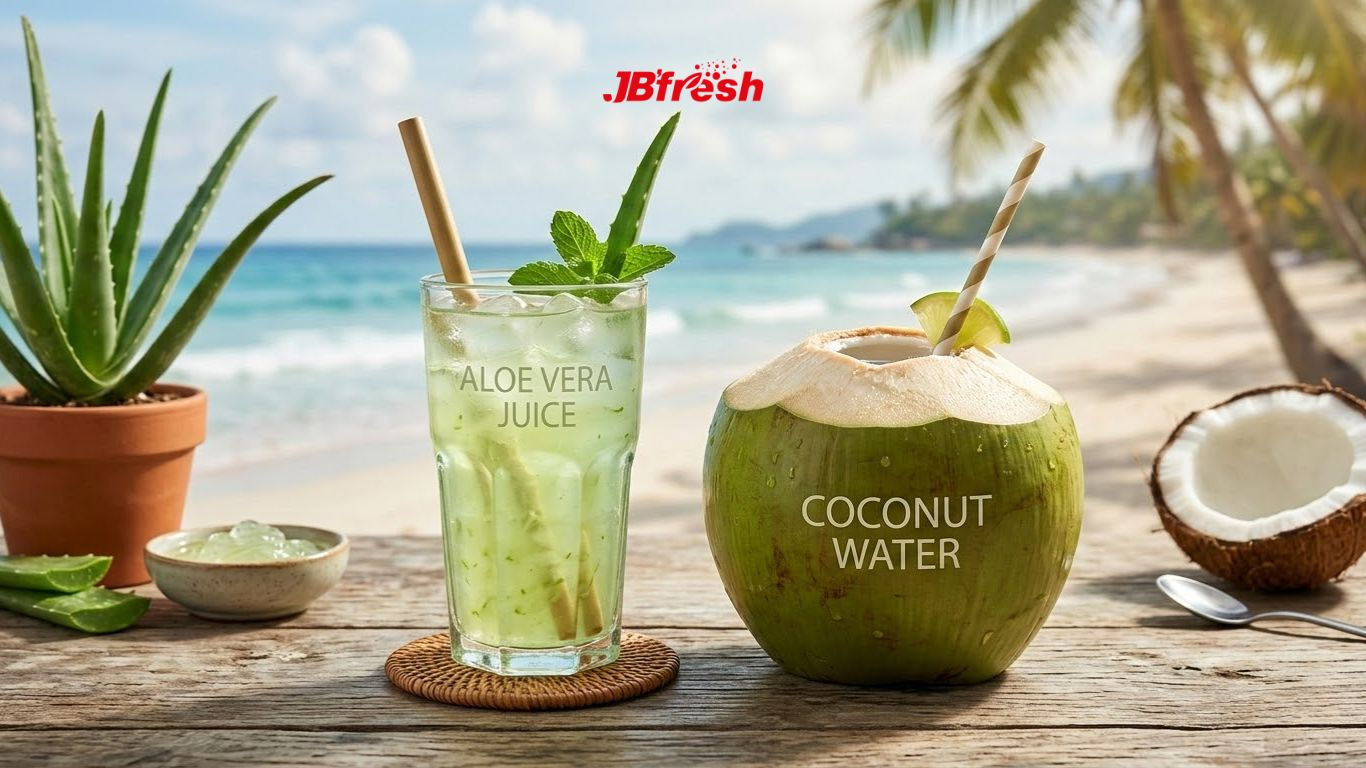
If your main goal is hydration, coconut water is the better choice. It replenishes fluids and electrolytes more effectively, especially after exercise, heat exposure, or heavy sweating. Aloe vera juice, while water-dense, works more like a functional wellness drink. It is better known for digestive support and skin-related benefits than for rapid rehydration.
When people look up aloe vera juice vs. coconut water, they are usually trying to decide which drink fits their daily routine, health goals, or product preferences. The truth is that these beverages are not direct substitutes. They serve different purposes, and choosing the right one depends on what your body actually needs.
Aloe Vera Juice vs Coconut Water at a Glance
Before getting into the details, here is a side-by-side comparison that makes the difference easier to see.
| Feature | Coconut Water | Aloe Vera Juice |
|---|---|---|
| Best for | Rapid hydration, post-workout recovery, electrolyte replenishment | Digestive support, gut soothing, skin-focused wellness |
| Hydration ability | Strong | Moderate |
| Primary function | Replaces fluids and electrolytes after sweating | Works more like a functional wellness drink than a hydration beverage |
| Key nutrients | Potassium, magnesium, sodium, natural sugars | Antioxidants, vitamins C and E, enzymes, polysaccharides |
| Calories per cup | Around 45 to 60 calories | Around 8 to 15 calories |
| Taste profile | Sweet, light, refreshing, slightly nutty | Bitter, sour, sometimes medicinal unless flavored |
| Best time to drink | After exercise, hot weather, dehydration, high sweat loss | In small servings for digestive comfort or wellness routines |
| Energy support | Yes, from natural sugars | Minimal |
| Digestive benefits | Not the main reason people choose it | Commonly used for acid reflux, regularity, and digestive soothing |
| Skin-related benefits | Limited in this comparison | May support clearer-looking skin over time |
| How much you can drink | Generally suitable in larger amounts for most healthy people | Better consumed in moderation |
| Safety note | High potassium may not suit people with kidney issues | Unpurified aloe with latex may cause cramps, diarrhea, and potassium imbalance |
| Better for hydration? | Yes | No |
| Better for digestive support? | No | Yes |
The difference is simple once you look at the drinks this way. Coconut water is a hydration beverage first. Aloe vera juice is a functional drink first.
Which Drink Is Better for Hydration?
When comparing aloe vera juice vs coconut water for hydration, coconut water comes out ahead quite clearly.
Why is coconut water a better rehydration drink
Coconut water is often described as a natural alternative to sports drinks because of its electrolyte profile. It contains a high level of potassium, along with magnesium and sodium, all of which are important when your body loses fluids through sweating.
That is why coconut water is especially useful after high-intensity cardio, outdoor activity, or workouts in hot weather. It helps replace what the body has lost and contains natural sugars that provide a quick energy boost.
Another point in coconut water’s favor is drinkability. It tastes naturally sweet and refreshing, so people are more likely to drink enough of it to feel rehydrated. A hydration drink only works well if people actually want to finish it.
For active consumers, cafés serving sports-friendly drinks, or beverage brands building a recovery-focused product line, coconut water has a very clear functional role.

Why does aloe vera juice play a different role?
Aloe vera juice contains plenty of water, but it is not usually chosen as a thirst-quenching drink. Its strength is not rapid fluid replacement. Instead, it is often used in smaller servings as part of a digestive or skin-support routine.
The source content describes aloe vera juice as something closer to a supplement than a beverage. That distinction is useful. People do not usually reach for aloe vera juice after a sweaty workout or a long walk in the sun. They reach for it when they want something soothing for the gut or when they are interested in broader wellness support.
So if the question is strictly about rehydration, coconut water is the stronger and more practical answer.

Key Nutrition, Taste, and Calorie Differences
Although both drinks are positioned as natural options, their nutritional profiles differ significantly.
Coconut water nutrition profile
Coconut water typically contains around 45 to 60 calories per cup, mostly from natural sugars. Those sugars are one reason it can provide a quick pick-me-up after exercise or when you’re dehydrated.
Its key nutrients include:
- Potassium
- Magnesium
- Sodium
That combination makes coconut water a beverage with a clear functional purpose. It supports hydration, helps replenish electrolytes, and fits naturally into recovery or refreshment occasions.
Taste also plays a big role. Coconut water is light, mildly sweet, and easy to enjoy on its own. It also blends well with tropical fruit flavors, which is one reason it performs well in retail beverages, juice concepts, and café menus.
Aloe vera juice nutrition profile
Aloe vera juice is much lower in calories, usually around 8 to 15 calories per cup, and many versions are sugar-free. It is less about energy or electrolyte replacement and more about bioactive compounds that support wellness goals.
The source content highlights:
- Antioxidants
- Vitamins C and E
- Enzymes
- Polysaccharides
These compounds are what make aloe vera juice appealing for digestive and skin health. It is not a stronger hydration drink, but it does offer different benefits.
Taste is where aloe vera juice can be more challenging. On its own, it is often bitter, sour, or slightly medicinal. That is why many commercial products flavor it or blend it with fruit juice to create a more approachable profile.
For beverage businesses, that matters. Coconut water can stand more easily as a hero ingredient. Aloe vera juice often works better when blended.
Health Benefits Beyond Hydration
Hydration may be the headline, but many buyers and consumers are also comparing these drinks based on their added benefits.
Coconut water for recovery and electrolyte support
The biggest health advantage of coconut water is its electrolyte content. It is especially relevant for people who sweat heavily, exercise regularly, or need a more natural recovery option than traditional sports drinks.
The source content also notes that coconut water’s potassium content may help counter the effects of sodium and potentially support healthy blood pressure in otherwise healthy individuals. That adds to its appeal as a wellness beverage, though hydration remains the main reason most people choose it.
For product positioning, coconut water fits best into:
- post-workout drinks
- hot-weather refreshment
- natural electrolyte beverages
- better-for-you hydration products
It does one job very well, and that clarity is valuable in the market.
Aloe vera juice for digestive and skin support
Aloe vera juice brings a different kind of benefit. It can help coat the digestive lining and soothe irritation caused by acidic foods. It is commonly used to support issues such as acid reflux, constipation, and digestive discomfort.
Its antioxidant profile and vitamin content may help reduce inflammation associated with acne and psoriasis, potentially supporting clearer-looking skin over time.
That makes aloe vera juice a better fit for:
- digestive wellness routines
- functional drink concepts
- skin-focused wellness beverages
- lower-calorie specialty drinks
It is less of an everyday hydration product and more of a targeted functional beverage.
Safety Considerations Before You Choose
Natural does not always mean unlimited. These drinks have different usage patterns for a reason.
When to be careful with coconut water
Coconut water is generally safe to consume in larger amounts than aloe vera juice. Still, the source content does include one important warning: its high potassium content may be a concern for people with kidney issues.
For most healthy consumers, that may not be a daily problem. Still, it is worth noting that coconut water can be a routine beverage, especially for people with specific medical restrictions.
Why aloe vera juice should be consumed in moderation
Aloe vera juice requires more caution. The biggest issue is the presence of aloe latex in unpurified products. According to the source content, consuming large quantities of unpurified aloe juice can lead to severe abdominal cramps, diarrhea, and potassium imbalance.
That is why product selection matters.
When buying or recommending aloe vera juice, look for wording such as:
- purified aloe vera juice
- decolorized aloe vera juice
This helps reduce the risks associated with latex content.
Serving size matters too. Aloe vera juice is usually best consumed in smaller quantities rather than as a full hydration beverage throughout the day.
Which One Should You Drink and When?
The best choice depends on what your body actually needs.
Best situations for coconut water
Coconut water makes the most sense when you need fast, practical hydration support.
It is a better fit for:
- post-workout recovery
- hot weather hydration
- high sweat loss
- quick electrolyte replenishment
- light natural energy from sugars and minerals
If someone is choosing a drink after cardio, a long walk in the heat, or an active day outdoors, coconut water is the more functional option.
Best situations for aloe vera juice
Aloe vera juice is the better fit when hydration is not the main priority.
It may be more suitable for:
- occasional acid reflux support
- digestive discomfort after acidic foods
- gentle regularity support
- wellness routines focused on skin and inflammation
- functional beverage blends rather than high-volume drinking
For many consumers, aloe vera juice works best as a small daily wellness serving, not as a replacement for water or a recovery drink.
For beverage businesses, this difference also shapes product development. Coconut water works well as a hero ingredient for hydration-led beverages. Aloe vera juice works better in smaller-format functional drinks, premium blends, or niche wellness offerings.
Final Takeaway on Aloe Vera Juice vs Coconut Water
In the debate over aloe vera juice vs. coconut water, coconut water is the better choice for hydration. It offers electrolytes, natural sugars, and a more practical fluid replacement profile for active people and anyone dealing with sweat loss or dehydration.
Aloe vera juice has its own strengths, but they sit in a different category. It is better viewed as a digestive and skin-support drink that should be consumed in moderation, especially when purified and properly labeled.
So the real answer is not that one drink is universally better. It is that each one serves a different purpose. If you need to rehydrate, reach for coconut water. If you want targeted digestive support, aloe vera juice may be the better fit.
For brands, cafés, and ingredient buyers, that creates a useful product strategy as well. Built with coconut water, when hydration is the core promise. Use aloe vera when the goal is functional wellness in a more controlled format. If you are exploring beverage ingredients or fruit-based drink solutions, JBFresh can help you choose options that fit both consumer demand and real product function.